

Vulnerable Robotics
Why humanoid helpers are not meeting expectations — and what soft, adaptive machines they can become instead.
The wrong dream
For decades, the dominant dream of a home robot has been remarkably consistent: a mechanical human. Two arms, two legs, a face, and the promise of becoming a general-purpose helper inside our homes. This vision did not emerge from engineering necessity — it emerged from culture.
From The Jetsons’ Rosie the Robot Maid in the 1960s to Honda’s ASIMO in the early 2000s, the future of domestic robotics was imagined as an anthropomorphic servant: upright, humanoid, and explicitly modeled after an adult human body. The logic seemed obvious. Our homes are built for humans, so robots should look and move like humans too.
But this assumption turns out to be deeply flawed.
The problem is not that robots aren’t advanced enough. The problem is that the form we expected them to take was never compatible with the reality of domestic life.
Why humanoid robots are failing at home
Despite enormous progress in sensing, control, and AI, generalist humanoid robots remain bulky, slow, expensive, and awkward — especially in small, cluttered homes.
Even if we imagine a future where humanoid robots have human-level perception and motor control, a deeper question remains: should a home robot really look and behave like a metal person?
Most homes were not designed to accommodate an extra human-sized occupant made of rigid metal. A tall bipedal robot in a small apartment introduces a long list of problems:
- Physical awkwardness: narrow gaps, low furniture, cluttered floors
- Safety concerns: rigid limbs, unpredictable collisions, high torque
- Social discomfort: being watched by a human-like presence
- Emotional mismatch: a robot that looks human but doesn’t feel human
If there’s a humanoid robot in your house and its job is to keep things organized, what’s it supposed to do when you leave something around?
How does it differentiate between what’s trash and what’s a family photo? And if it is a family photo, how does it know where that photo goes?
There’s no way for that robot to know without you explaining, item by item, where everything belongs.
– Chris Wardman, CEO at Boston Hardware Studios

Domestic life is not a factory floor. It is full of:
- pets that move unpredictably
- fragile objects
- tight spaces under furniture
- social boundaries and personal zones
- moments where not acting is the safest behavior
A two-meter metal robot cannot improvise like a human adult — and more importantly, it shouldn’t need to.
Soft robotics: a different technological paradigm
Soft robotics departs from traditional robotics at a fundamental level.
Instead of rigid joints, metal frames, and high-force motors, soft robots are built from flexible, deformable materials — silicone, rubber, textiles — and prioritize compliance over strength.
I think there are two dimensions that are super important: predictability and communication. On the predictability side, you need to know what the robot is going to do.
And on the communication side, it has to express its intent — especially if you’ve never interacted with it before
– Dylan Bourgeois, Founder & Engineer
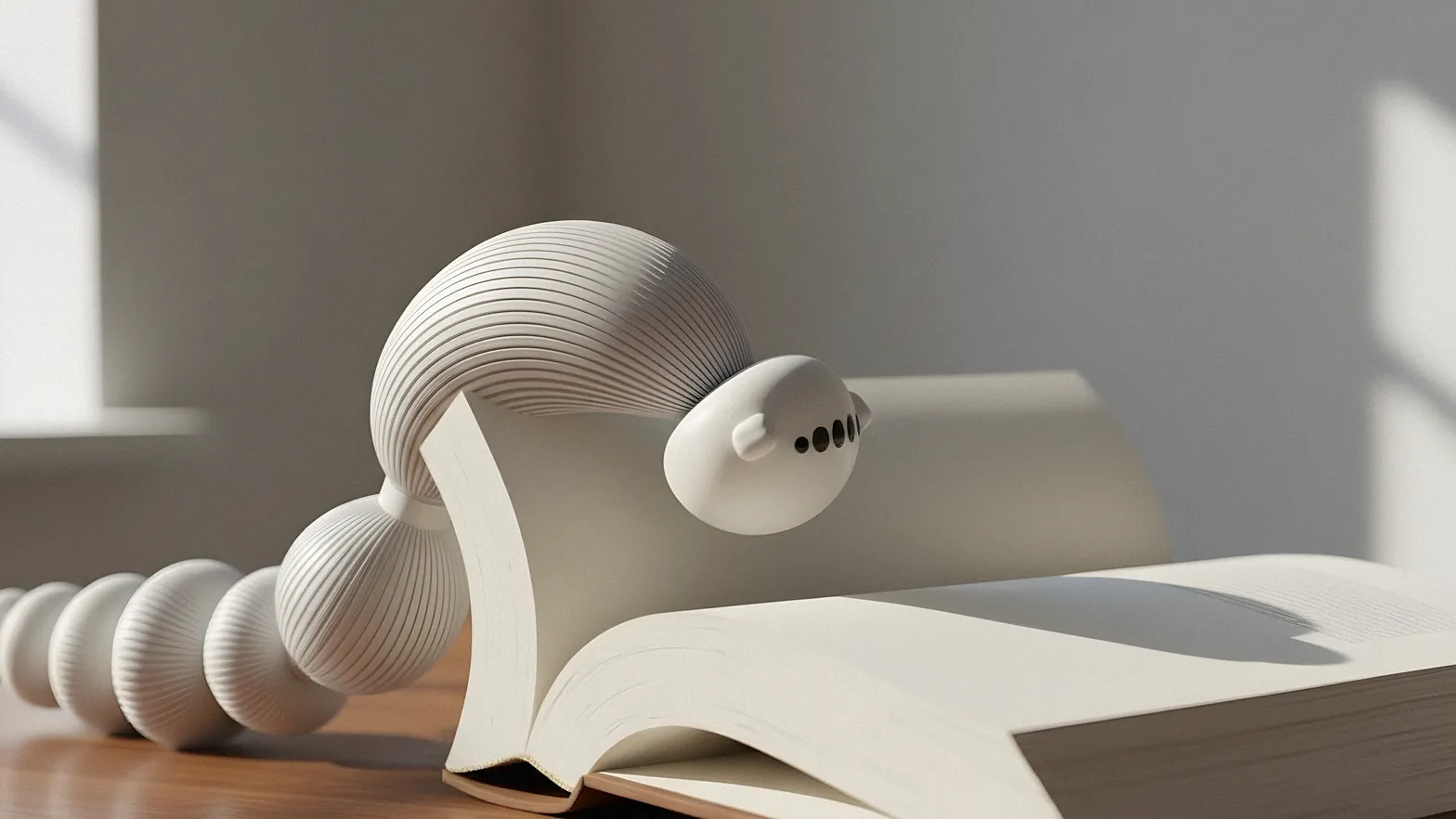
Key properties of soft robotics:
Flexibility: the body bends, stretches, and deforms
Safety: collisions are absorbed rather than dangerous
Adaptability: shape conforms to the task and environment
Gentle manipulation: fragile objects can be handled safely
If a soft robot bumps into a person or a pet, it yields. If it encounters an irregular space, it reshapes itself instead of forcing entry.
This is not a minor improvement — it’s a different philosophy of interaction.
Merging, not dominating
Soft robotics allows us to imagine robots that behave more like organisms than machines.
Consider a robot that:
- deploys a thin, snake-like arm to retrieve objects from under a sofa
- changes posture to appear smaller and non-threatening around pets
- uses low-pressure suction or flexible grippers instead of rigid hands
- relaxes into a compact, “off-duty” form when idle, signaling safety
While it’s working, it’s nice to feel its presence. But when it’s done, you don’t want it staring at you.
Once it finishes, it should disappear a little bit — like a “Roomba” under a shelf.
– Dylan Bourgeois, Founder & Engineer

Such a robot doesn’t dominate space. It merges into it.
Instead of standing tall, it stays low. Instead of grabbing, it slides, pulls, or gently sweeps. Instead of insisting on human-like interaction, it respects domestic rhythms.
Scenarios that actually matter
When we reduce the number of scenarios a robot needs to handle, clarity emerges. Examples of meaningful domestic interactions:
Pet interaction
A robot notices a dog in the kitchen. It slows down, moves sideways, lowers its height, and monitors tail and ear position. It never enters the pet’s food zone. If it needs to clean spilled kibble, it uses a soft sweeper rather than approaching the bowl directly.
A general robot at home is functionally more powerful — but it’s also much harder to accept. It’s easier to understand a machine that has a clear role.
– Dylan Bourgeois, Founder & Engineer
Finding small lost objects
An AirPod falls under a dresser. Instead of lifting furniture, the robot deploys a 2–3 cm soft pneumatic tentacle that slides underneath, gently pulls the object toward a tray, and retracts.
Laundry day
Socks fall behind the washing machine. A vine-like soft extension snakes into the gap, retrieves small items, and sorts them by weight or texture.
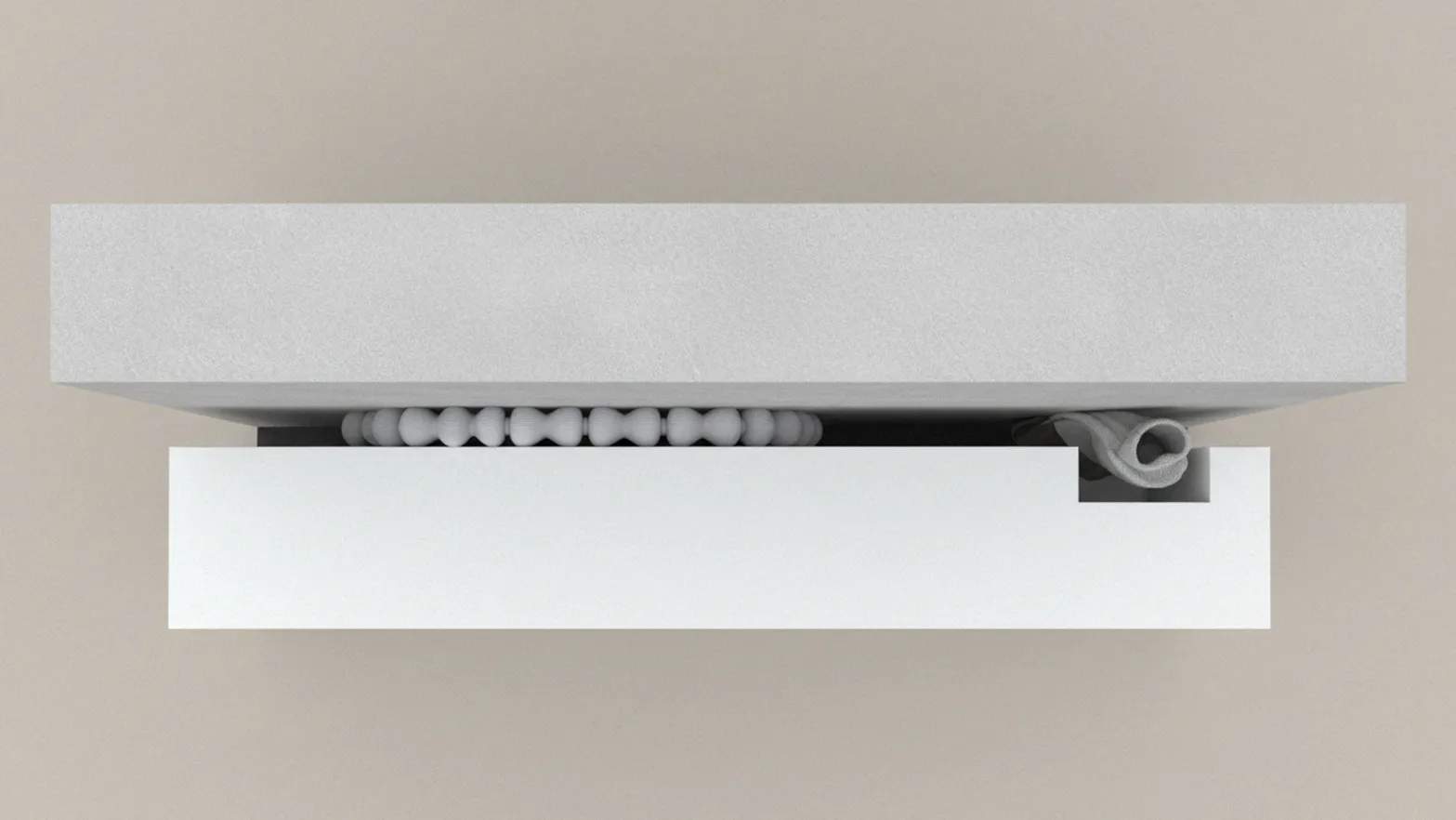
None of these tasks require a robot to walk upright, look human, or exert great force.
They require situational awareness, softness, and humility.
The key insight
A home robot does not need to stand tall to be useful. In fact, standing tall is often the wrong posture.
The most valuable domestic robots are those that adapt their shape, presence, and behavior to context — robots that know when to act, when to wait, and how to remain unobtrusive.
This is not about building servants.
It is about designing cohabitants.
If robots are to truly enter our homes, we must abandon the fantasy of the humanoid helper and embrace a more grounded vision.
The future of domestic robotics lies in:
- soft, compliant bodies
- animal- or appliance-inspired forms
- reduced scope and clear boundaries
- contextual, emotionally aware behavior
- machines that adapt to homes — not the other way around
A robot that belongs at home will not look like us. It will behave like something that understands where it is.